Muncaster Castle is to host World Extreme Medicine as they return with a four day space medicine course.
There is always something fascinating to learn and explore at Muncaster, but from June 1-4, this will be taken to new heights as the castle hosts a world-leading space medicine course.
After the success of their Prologned Field Care Course, World Extreme Medicine (WEM) are returning to Muncaster for a medicine course which is truly out of this world.
Spend four days gaining indepth insight into healthcare in one of the most challenging and fascinating contexts of all.
While space medicine may feel abstract and intagible, reserved for distant astronauts and billion-pound missions, the reality is that space medicine influences medical practice on Earth every day.
From remote diagnostics to managing patients in extreme, resource-limited environments, the lessons learned in orbit are increasingly relevant to clinicians, expedition leaders, and healthcare systems worldwide.
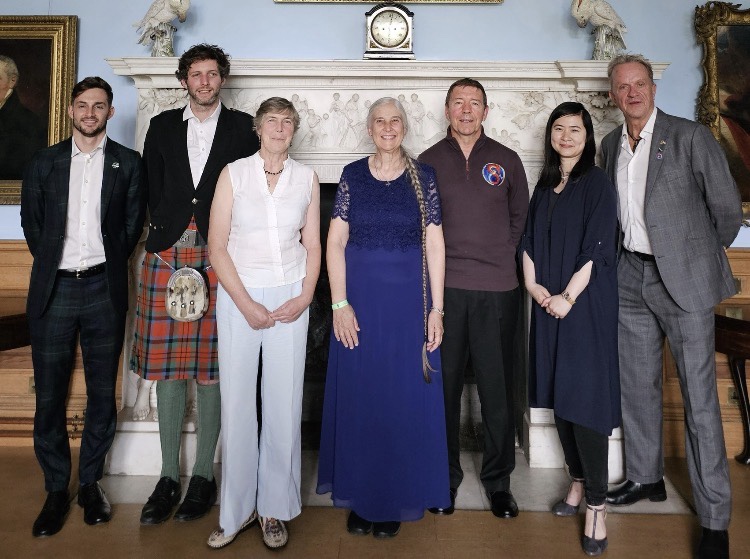
The course will be led by astronaut Dr Michael Barratt.
Dr Barratt has spent over 400 days in space, spanning multiple varied missions, including two spacewalks and eight months aboard the International Space Station (ISS).
His background in internal and aerospace medicine positions him uniquely within both the medical and aerospace worlds.
He is a key figure at the cutting edge of space medicine, serving as Senior Editor of Principles of Clinical Medicine for Space Flight and lecturing around the world.
The course will cover a wide range of topics, including how the human body copes with and adapts to microgravity, the physiological impacts of space flight, and the healthcare challenges posed by the practical constraints of space travel, where resources are limited and evacuation is often not possible.
It will also delve into the future of space medicine, particularly the emerging challenges posed by the rise of space tourism and commercial space flight.
The course is highly practical in its approach, with teaching drawing on real operational experience and case-based examples.
Sessions blend clinical science with lived experience, offering rare insight into how medicine is practiced in space, while also exploring how these lessons can be applied here on Earth, such as using knowledge gained from the muscle and bone impacts of microgravity to support the care of long-term ICU patients.
The course is designed for healthcare professionals and students, of all backgrounds, who are interested in understanding how medicine is practiced in extreme, remote, and high-performance environments.
While it is, of course, particularly suited for those curious about aerospace medicine itself, the content, especially its focus on healthcare in challenging and resource-limited environments, is widely applicable across a range of remote and extreme healthcare contexts.
No prior experience in space or aviation medicine is required, only curiosity.
More information about this unique opportunity, as well as details of how to book your place can be found on World Extreme Medicine’s website here.
Accomodation for the duration of the course on-site at Muncaster can also be booked separately, instructions for how to do so can be found in the course joining instructions.

