Ten years ago, in November 2016, Stobbarts made an unexpected comeback, the unlikely sequel to a trailblazing construction success story.
The decision took everyone by surprise, including company founder John Stobbart, who had been considering how best to spend his retirement.
But two years after walking away from the business he had built, John was growing restless.
“When I retired, I wasn’t ready to go,” he recalled.
“I realised that I missed the social interaction.
“It wasn’t time to hang up my boots just yet.”
The company that returned in 2016 was a very different proposition from the major Cumbrian contractor John had built from humble beginnings since 1998.
There was no workforce, order book, nuclear work or storage yard. Instead, Stobbarts began with one room at Moss Bay House, a handful of people and a single vehicle.
John, a joiner by trade, still had a lifetime of construction experience, a strong reputation and an extensive network of contacts.
The catalyst came when a former client approached him about a £500,000 office refurbishment.
John initially agreed only to look at the plans, but soon found himself pricing the job and considering how it could be delivered without a workforce or, at that point, a company.
A chance encounter with former colleague Ricky Fee at Workington’s B&Q proved decisive.
John invited Ricky to see the new premises at Moss Bay House, where they discussed the prospects.
Ricky agreed to join – an encounter John would later describe as an “act of God”.
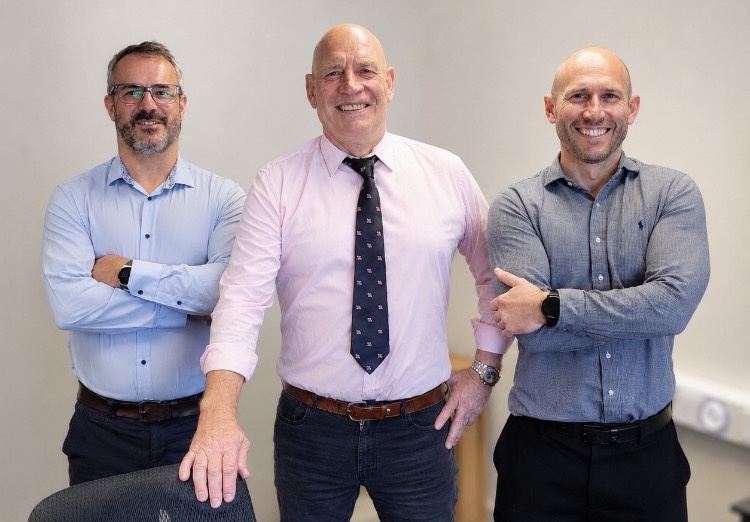
Former employees gradually returned, while John’s son Adam joined to develop the company’s nuclear site operations.
“We were starting from a very different position, but we had a strong reputation, good people and a determination to make it work,” Adam recalled.
Nevertheless, rebuilding the business presented considerable challenges.
“It was a standing start,” Ricky said.
“Finding the trades and operatives to deliver the work was one of the biggest challenges.”
Early contracts came through established contacts, bringing in minor civil engineering and refurbishment work.
In 2017, Stobbarts restored the Derwentwater Boat House for the National Trust and reconstructed the historic crossing at High Nook Farm following flood damage.
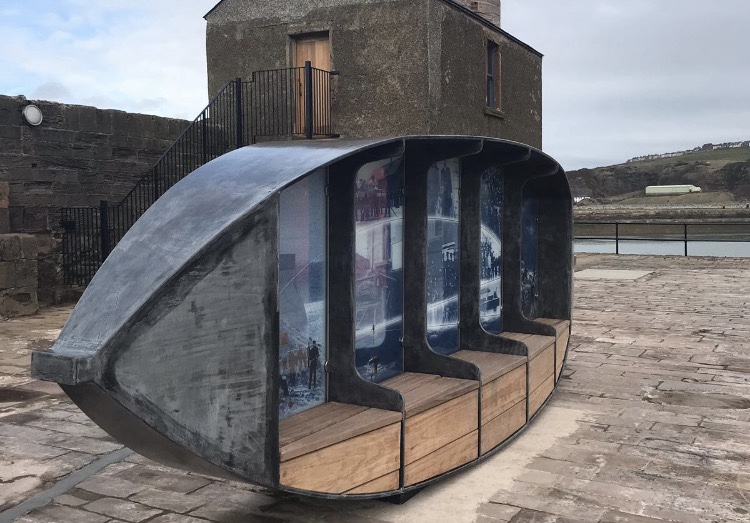
The following year brought the company’s first nuclear work since its return, alongside projects including the Old New Quay regeneration in Whitehaven and the refurbishment of St Bees School, worth more than £2 million.
Stobbarts also delivered the approximately £2 million design-and-build conversion of the historic Tithebarn and Dairy Cottage at Old Windebrowe, Keswick, for the Calvert Trust, completed in 2019.
By January that year, the company had moved to larger premises at Tarn Howe on Lakes Road, with turnover reaching around £3.5 million within a couple of years of the restart.
A major milestone followed in 2020 with the multi-million-pound B13 Welfare project at Sellafield, regarded by the Directors as the company’s first significant nuclear contract following its return.
Further opportunities followed at the Low Level Waste Repository (LLWR), Drigg, including a £342,000 contract to construct a new accommodation building and associated compound for OneFM (Mitie).
In 2021, Stobbarts secured another £417,000 contract at Drigg, resurfacing approximately 4.95km of perimeter security patrol tracks.
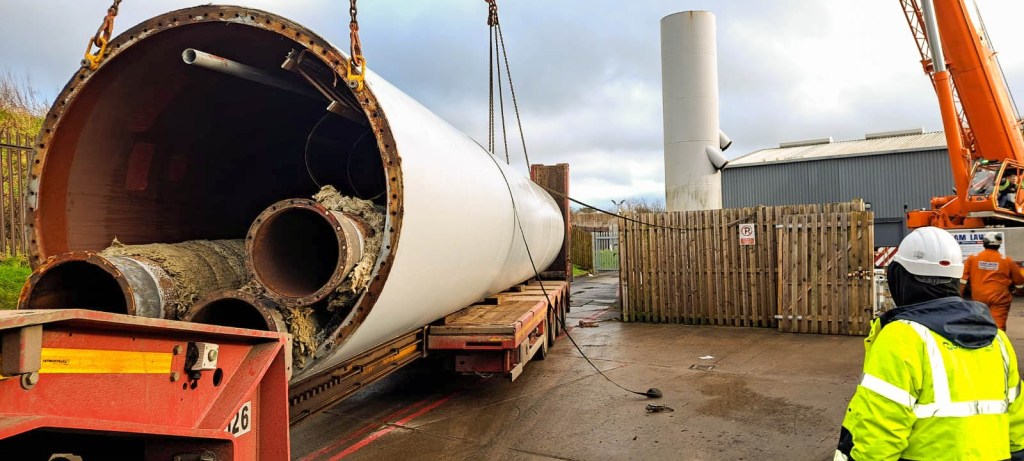
The work required careful coordination of plant, deliveries and construction activities within an operational nuclear site.
Together, these projects helped establish the experience and reputation on which Stobbartswould build its nuclear operations.
Meanwhile, the company continued to expand its non-nuclear portfolio, delivering projects for the NHS, local authorities, schools, community organisations and commercial clients.
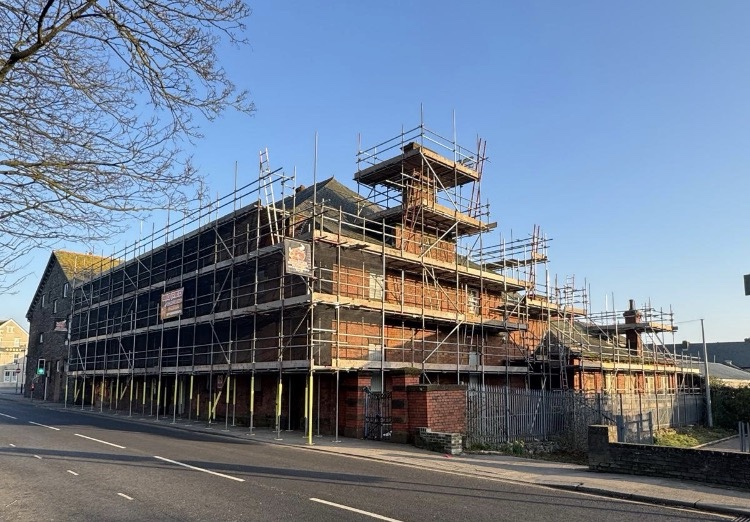
These included work at West Cumberland Hospital and the former Maritime Museum in Maryport, alongside more recent projects such as three pedestrian footbridges on the Flimby Coastal Path, Maryport Promenade Café and major works to Millom Old Library.
In April 2024, Stobbarts joined the Sellafield Programme and Project Partners (PPP) framework, covering groundworks, concrete and civil engineering, with a potential value of up to £40 million over 15 years.
Direct nuclear work has also continued to grow, with current projects for Nuclear Waste Services at LLWR and the Electrical Distribution Network Upgrade Project (EDNUP) at Sellafield.
Stobbarts works with nuclear partners including Amentum, Mitie, One Aim, AtkinsRéalis, Altrad, Graham Construction, NNL, Morgan Sindall and Shepley Group.
Today, Stobbarts operates across multiple nuclear and non-nuclear frameworks, delivering construction, civil engineering, refurbishment, conservation and specialist works.
Its capabilities are supported by sister companies Stobbarts Electrical, Energy Efficient Window Systems and Stobbarts Tool and Plant Hire.
Annual turnover has reached approximately £12 million, with 105 directly employed staff, 60 vans, three heavy goods vehicles and an extensive range of plant.
Projects range in value from around £10,000 to £5 million.
Since its return, Stobbarts has delivered more than £66 million of work across West Cumbria, comprising approximately £40 million of nuclear work and £26 million of non-nuclear work, alongside approximately £15 million of work under New Engineering Contracts (NEC).
Its directly employed workforce and ability to self-deliver remain central to the business, supported by specialist capabilities across the wider group and digital systems for managing quality, project information and handover.
Investment in people has been equally important.
Since 2016, Stobbarts has taken on 11 apprentices, with an ambition to double that number by 2030.
The company also provides wider training and development opportunities.
Among those to have benefited are nineteen-year-old Quality Engineer Harvey Shimmings and Jayden Fee, who joined in 2021 while studying at Lakes College and has since progressed to Trainee Quantity Surveyor.
Millions of pounds are also spent annually within the local supply chain, supporting businesses and employment across West Cumbria.

Reflecting on the company’s progress, John paid tribute to the people who had made its success possible.
“Hard work has brought this to fruition, with the development of our sister companies – Stobbarts Electrical, Energy Efficient Window Systems, and our newly-formed Tool and Plant Hire Division.”
“We were building from scratch which was arduous and difficult.
“But I genuinely wouldn’t have missed it. And now the future is bright for the company.
“We are as strong now as we have ever been and we have a lot of good people working for us.”
John’s own working life has extended well beyond construction.
He served with Workington RNLI for 37 years, joining in 1987, becoming Second Coxswain in 1991 and Coxswain in 1994.
He continued in that role until January 2024 and was awarded the British Empire Medal in 2021 for voluntary service to maritime safety.
“I would like to pay tribute and to give thanks to the employees who have helped this to happen over the years and in both phases of the company.
“I would like to express my gratitude to those that are still there and also to those who are no longer with us.”
Ten years after its return, Stobbarts has come a long way from that single room at Moss Bay House.
But John insisted that the principles underpinning the business remain unchanged.
“When presented with the opportunity, we always endeavour to deliver projects safely and efficiently, which is a credit to our workforce.”

