Dozens more Cumbrians and visitors now know how to help save a life in a water emergency after engagement by blue-light services and community partners.
Cumbria Fire and Rescue Service, Westmorland and Furness Council, GLL, North West Ambulance Service, and local community responders united on Sunday, June 14, for a free event focused on water safety at Jenkins Field, Glenridding.
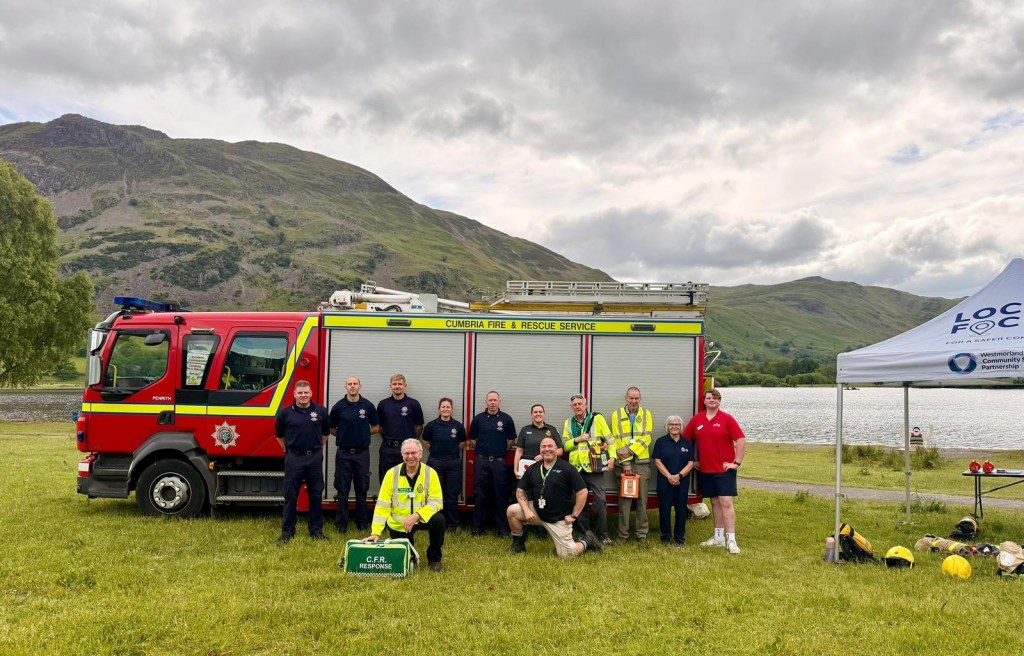
The activity was organised as part of Drowning Prevention Week, which takes place this year between 13–20 June ahead of the busy summer season, and included important water safety advice and live demonstrations of CPR and life-saving skills.
Residents and visitors could learn essential water safety advice including the ‘Float to Live’ instruction if you get into difficulty and ‘Phone, Float, Throw’ guidance if someone else is struggling in water.
Family-friendly activities also included water safety themed activity sheets and badge making.
There was a timely reminder of the risks of entering water during the event as firefighters were mobilised to a water rescue at the River Greta in Keswick, where they used a throw line to rescue a casualty from the water who was then placed in the care of the ambulance service.
Scott Cameron, Group Manager for Prevention and Protection at Cumbria Fire & Rescue Service, said: “We can all help to prevent lives being lost to drowning by teaching more people in our communities what to do before blue-light services arrive at a water rescue.
“People can have confidence that emergency services will always respond when they are needed, but it can take time to reach a casualty in water, particularly in more remote parts of our county.
“By having more people in our communities who know the right actions – such as ‘Float to Live’ and ‘Phone, Float, Throw’ – to take during that crucial period before they arrive, more lives will be saved.
“Simple, easy-to-remember instructions work, and collaborating with partners and the public is the best way of spreading that message to residents and visitors.”
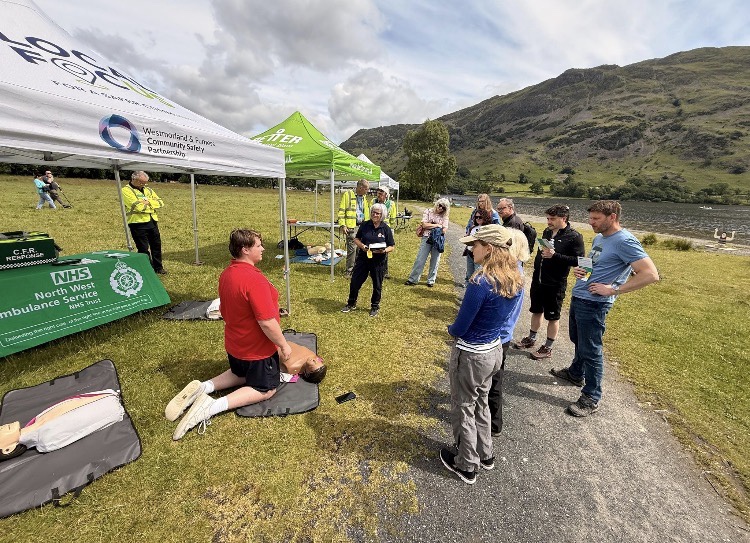
The event raised awareness of cold water shock, which remains a real danger even on hot days and can drastically increasing the risk of drowning.
Megan Stephenson, Community Resuscitation Engagement Officer for North West Ambulance Service, said: “Cold water shock can affect anyone, even the strongest swimmers.
“Rivers, reservoirs and lakes may appear calm but can also conceal hidden currents, sudden drops and significant temperature changes.
“We were delighted to support our emergency service partners Cumbria Fire and Rescue, as well as lifeguards from GLL and Westmorland and Furness Council, in highlighting the importance of water safety and raising awareness of CPR, which is crucial in the event of a cardiac arrest.”
You can find more water safety advice on Cumbria Fire & Rescue Service’s website here
Drowning Prevention Week is an annual water safety campaign designed to educate children and young adults in water safety and lifesaving skills, organised by the Royal Life Saving Society UK.
To find out more visit their website here

