Michelle Scrogham MP is ‘pleased’ to see a new Road Safety Strategy, following campaign to protect young drivers in Barrow in Furness.
Michelle Scrogham, MP for Barrow and Furness, has welcomed the government’s new Road Safety Strategy after joining local campaigner Sharron Huddleston to push for changes that would protect young drivers in Barrow and Furness.
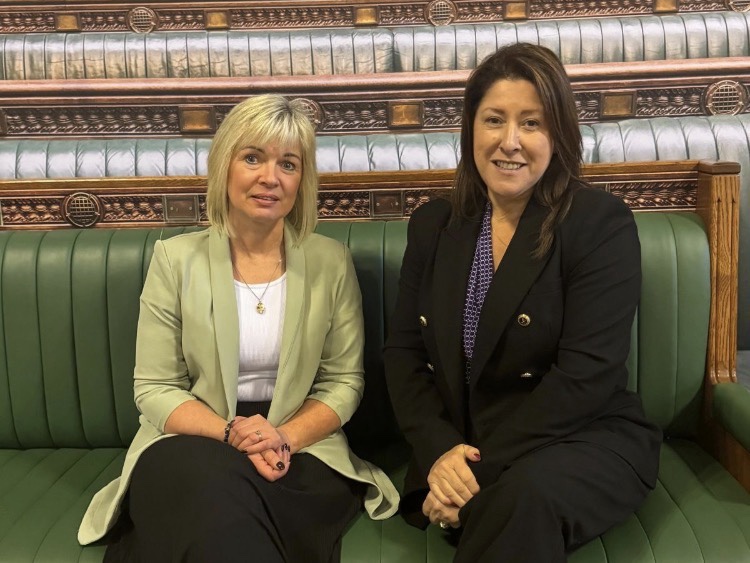
Since her election, Ms Scrogham has been campaigning for changes to protect young drivers, alongside local mum, Sharron Huddleston.
Sharron lost her daughter, Caitlin, in a car crash on the A595 in July 2017.
Since then, Sharron hasn’t been working tirelessly for measures to protect young drivers including the introduction of graduated driving licensing.
Michelle Scrogham MP said: “I am pleased to see the new road safety strategy because it has been over a decade since we have had one, and in that time we’ve seen an increase in deaths that could have been avoided, particularly amongst young people.
“I have been honoured to campaign alongside Sharron Huddleston whose daughter, Caitlin, was tragically killed on the A595 in 2017.
“I cannot imagine going through what Sharron has been through, and I am in awe of her selfless campaign for measures that would help protect more young drivers and stop other mums from having to go through what she has gone through.
“Sharron and I met with Transport Secretary, Heidi Alexander, last summer and set out the case for improvements.
“I welcome the measures introduced today, including the minimum learning period for learner drivers, but will continue to call for graduated driving licences which I think could have a big impact in reducing avoidable deaths amongst young people.”
After more than a decade without a Road Safety Strategy, 22 European countries have made greater progress than the UK in reducing road fatalities, causing Britain to slip from third to fourth in European road safety rankings.
Around four people still die on Britain’s roads every day, many in crashes that could have been prevented.
Labour’s Road Safety Strategy marks a decisive break from that failure and aims to cut deaths and serious injuries on Britain’s roads by 65 percent by 2035.
It provides a clear plan to tackle the main causes of serious collisions, including drink and drug driving, speeding, mobile phone use, unsafe vehicles, and poor road design.
The strategy includes consultations on lowering the drink-drive limit, unchanged since 1967, tougher action on repeat offenders, and the potential use of alcohol interlock devices.
To reduce collisions involving young drivers, the government will consult on a three or six-month minimum learning period, while mandatory eyesight testing for drivers over 70 will also be considered as the population ages.
Further measures include cracking down on illegal ‘ghost’ number plates, uninsured driving and vehicles without a valid MOT, mandating 18 new vehicle safety technologies, and establishing a new Road Safety Investigation Branch and Board to oversee delivery.
Labour’s Secretary of State for Transport Heidi Alexander said: “Every life lost on our roads is a tragedy that devastates families and communities.
“For too long, progress on road safety has stalled. This strategy marks a turning point.
“We are taking decisive action to make our roads safer for everyone, from new drivers taking their first lessons to older motorists wanting to maintain their independence.
“The measures we are announcing today will save thousands of lives over the coming decade.”
Labour’s strategy is built on the internationally recognised Safe System approach, which recognises that while human error is inevitable, deaths and serious injuries are not.
Rather than placing responsibility solely on individual drivers, the approach ensures that road design, vehicle safety, enforcement, and education work together to protect all road users.
It demonstrates Labour’s commitment to safer communities, easing pressure on the NHS, and ending the complacency that defined the Conservatives’ record on road safety.
 THE HERDWICK NEWS