A new tool which will work alongside the county’s CCTV has reduced the time taken for Cumbria Police to track people, vehicles and items.
The Police, Fire and Crime Commissioner David Allen and Cumbria Constabulary are already utilising a new tool which works alongside the county’s new HD CCTV capability to significantly enhance the police’s ability to investigate crimes, find missing people and safeguard the vulnerable.
In January, the Constabulary announced the roll-out of its new HD CCTV cameras across the county.
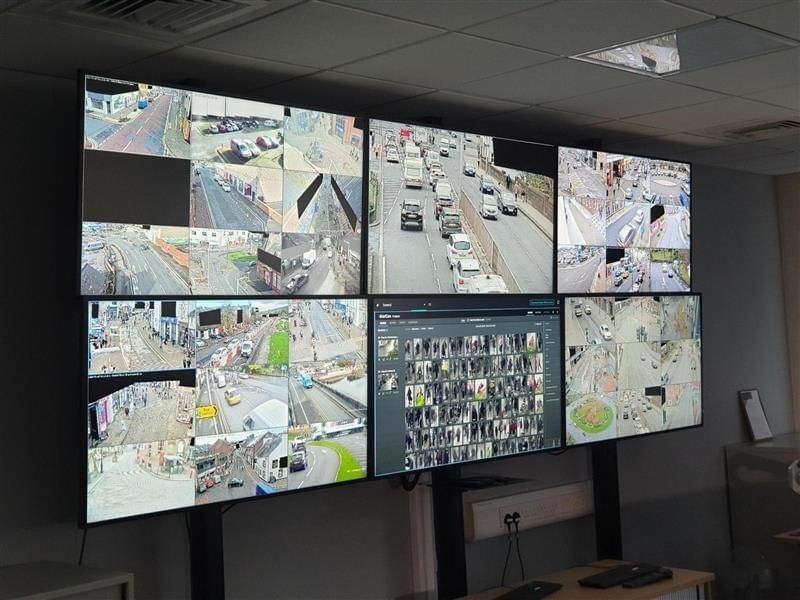
Building upon those enhancements, the Constabulary has introduced a new object-focused analytical capability which allows officers to search tens or even hundreds of hours of CCTV footage in a fraction of the time it would have taken a police officer or member of staff.
This drastically reduces the cost of resourcing such work and, more importantly, cutting the time it takes to identify key evidence in cases including missing person enquiries, rapes and serious assaults.
Cumbria’s Police, Fire and Crime Commissioner, David Allen, said: “This is a fantastic use of new and emerging technologies for the benefit of the people of Cumbria.
“The introduction of object analytics into our CCTV system is going to significantly help the Police identify both criminals and those who are vulnerable more quickly.
“In many situations, time is of the essence. The ability to search through hundreds of hours of footage in a short amount of time could, quite literally, be the difference between life and death.”
The new object-focused analytical tool can take attributes recorded on CCTV and make them identifiable, recordable and searchable.
The object-focused analytical tool can recognises whether someone is male or female, adult or child while no other human or identifying attributes are recorded – not hair colour, not skin colour, not gait.
It recognises colour of upper and lower clothing and whether long or short whether the person was wearing a hats, face coverings, carrying a backpacks and whether anything is carried in hand, such as a bag or umbrella.
It can also estimates height, speed of travel and path of travel across the screen.
An example return result may be:
- Adult
- Male
- Blue long-sleeved top
- Brown long bottoms
- No hat
- No Face covering
- Wearing a backpack
- Nothing in hand
All of this information is stored as metadata behind each and every object on the screen, meaning a busy street scene can be categorised and logged within seconds.
This metadata allows the footage to be searchable, by applying a number of filters, removing objects that the person searching is not interested in, and quickly bringing you to the target that you’re looking for.
Many hours of footage can be searched in just minutes, but the final decision around whether the person or vehicle is who/what you’re looking for remains with the operator.
The tool also allows for vehicles to be searched for, by colour and type (e.g. car, van, bike motorbike, etc)
Chief Superintendent Carl Patrick said: “Building on the roll-out of our improved HD cameras across the county, this analytical tool is helping ensure we extract the maximum benefit for the public from that investment.
“The tool is proving invaluable to our attempts to find missing people, safeguard vulnerable people and to help officers working on operations investigating significant and serious criminality.”
The new analytical tool was used on a burglary case with a total of 36 hours of footage run through the system, covering 12 CCTV cameras, with the system successfully identifying the suspect from his clothing in numerous places in a matter of minutes.
 THE HERDWICK NEWS