Penrith and the Border MP, Dr Neil Hudson MP is celebrating a campaign win as overreaching solar developments will no longer be allowed to compromise productive agricultural land.
Dr Hudson has been a strong and consistent advocate for protecting farming land and the greenbelt against encroaching developments that would also compromise food production.
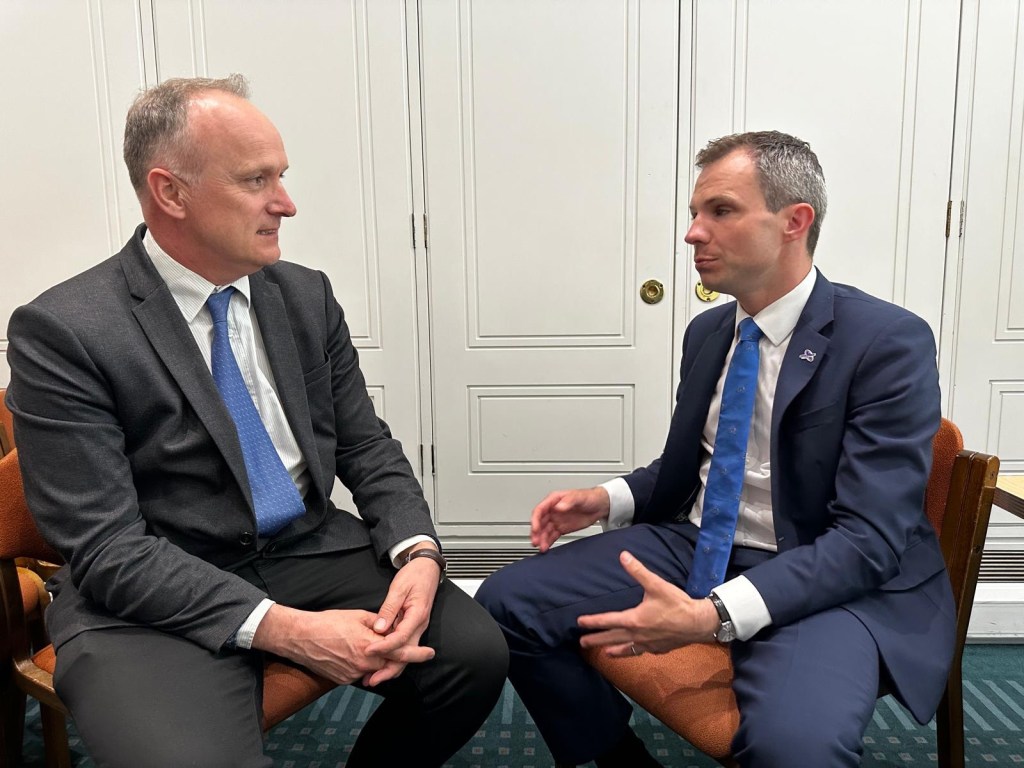
Dr Neil Hudson MP said: “Food security is national security. While I have always maintained this, recent global events including the war in Ukraine, shipping disruption in the Red Sea and increasingly common extreme weather events have brought this into sharp relief.
“As such I am delighted to have received confirmation from the Energy Secretary that we are prioritising prime agricultural land against encroaching solar developments that prevent our brilliant British farmers from feeding the nation.
“I’ve called for this again and again, and I’m thrilled to have played my role in seeing the vital policy implemented.
“Solar is a valuable element of our clean green future-proof energy mix, and this announcement is by no means an attack on renewables.
“Instead, this is a common sense balance between food security and energy security where solar panel implementation will be prioritised for agricultural buildings, contaminated or industrial land, and other unproductive brownfield sites.
“I’d like to see our Conservative Government go one step further and extending the development ban one step further to both the greenbelt and grade 3b land which is capable of growing grass and cereals which are of great importance to farmers.”
Given destabilising international events for food security including war, supply chain disruption and extreme weather, Dr Hudson has repeatedly stood up to protect farmland against industrial scale solar developments that are becoming increasingly common.
Solar remains a key priority for the Department for Energy Security and Net Zero but must be placed in pragmatic locations that balance energy and food security needs.
Applications will now prioritise previously developed land, brownfield sites and rooftops and Government is going one step further by making it easier and cheaper to install solar on top of warehouses, farm buildings, factories and car parks.
While the impact of industrial scale solar developments will never represent a significant proportion of the UK’s land-use, concentrated geographical clusters are becoming more and more prevalent.
This is especially true in areas such as Lincolnshire where there is an incredibly productive tradition of arable farming.
This comes a day after the Prime Minister hosting the second annual Farm to Fork Summit at 10 Downing Street to which Dr Hudson was invited by the Prime Minister, alongside key industrial professionals, reaffirming the nation’s commitment to bolstering food security with a suite of proactive measures to boost production.
The measures extend to land that is of grade 1 to 3a which are the most productive agriculturally. Dr Hudson, while a keen proponent of the measures, is keen to champion the countryside economy even more by extending the regulations to land graded 3b which is capable of moderate yields of crops such as grass or cereals.
 THE HERDWICK NEWS