A rare archaeological object that was worth more than gold has been found during excavations at Carlisle Cricket Club.
Roman Imperial Purple or Tyrian Purple paint pigment was found as part of the city’s Uncovering Roman Carlisle project and is thought to be the only example of its type in Northern Europe.
A lump of a soft mysterious purple substance was discovered in the drains of the Roman Bathhouse within the grounds of Carlisle Cricket Club, during the 2023 excavation.
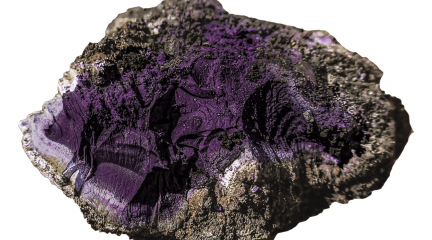
The drains it was discovered in relate to a monumental building with a bathhouse built in the 3rd Century.
Frank Giecco, Technical Director at Wardell Armstrong, said: “For millennia, Tyrian Purple was the world’s most expensive and sought after colour.
“It’s presence in Carlisle combined with other evidence from the excavation all strengthens the hypothesis that the building was in some way associated with the Imperial Court of the Emperor Septimius Severus which was located in York and possibly relates to a Imperial visit to Carlisle.
“Other evidence being an inscription stone to the Empress Julia Domna, the date of the monumental building, among the largest on Hadrian’s Wall, coinciding with Emperor Septimius Severus campaigns in Scotland, and an ancient source stating Septimius Severus was in Carlisle, and the high quality of the objects discovered at the bathhouse, granting of civic status to the local Celtic tribal capital at Carlisle; which in effect is the beginning of the city of Carlisle.”
The purple was tested with the support of British Geological Society and further analysis is ongoing with the Newcastle University.
Experts from Newcastle University showed it was organic and contained levels of Bromine and beeswax – this almost certainly indicates it is Tyrian Purple, the colour associated with the Imperial Court in the Roman Empire.
Frank Giecco continued: “It’s the only example we know of in Northern Europe – possibly the only example of a solid sample of the pigment in the fort of unused paint pigment anywhere in the Roman Empire.
“Examples have been found of it in wall paintings (like in Pompeii) and also some high status painted coffins from the Roman province of Egypt.”
Tyrian Purple was phenomenally difficult to make as it is made from thousands of crushed seashells from the Eastern Mediterranean, North Africa, or Morocco.
This made the labour intensive colour expensive and worth more than gold pound for pound and possibly three times as much in some sources.
It was most famously produced around the city of Tyre in modern day Lebanon which gives it its name.
The bathhouse is the largest known building on Hadrian’s Wall, with over 2800 significant finds, with 550+ Roman coins from centuries of occupation, 300+ hair pins, Imperial stamped tiles, hundreds of stunning glass beads, gaming pieces, even a rare Roman doll’s foot.
Significantly, 70 intaglios have been discovered in the drains.
These are magnificently carved gemstones which dropped from Roman signet rings when the glue holding them melted in the bathhouse heat.
In 2023, two monumental and unique carved stone heads were discovered by a volunteer on their first ever excavation.
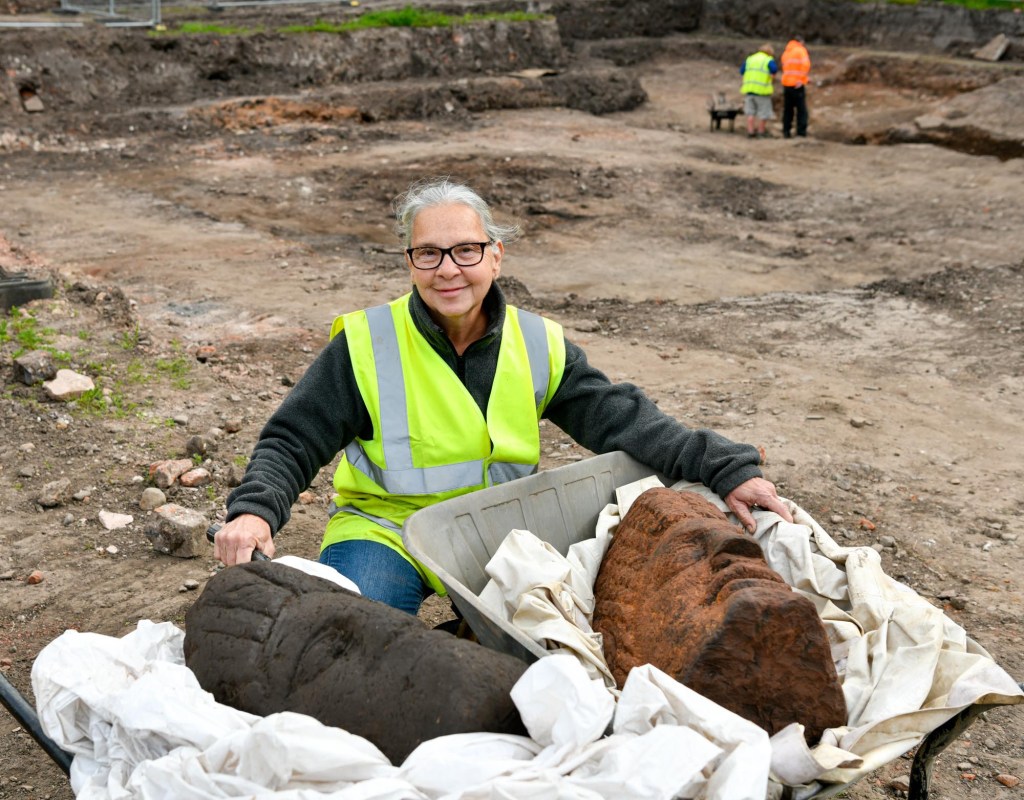
The building itself is providing stunning structural insights with North African style vaulting tubes used for its roof construction.
The award-winning community archaeological dig, Uncovering Roman Carlisle (URC), is set to return to Carlisle’s Roman Bathhouse to discover more of the remaining mysteries of the site.
The dig at Carlisle Cricket Club will resume between Saturday, May 11 and Saturday, June 15.
Hundreds of volunteers have already contributed to the dig with limited spaces are available for volunteers.
No prior experience in archaeology is needed, just enthusiasm in learning about Carlisle’s past.
The site will be active and open to the public between Monday and Saturday of each week of the dig. Tours of the site will be held between 10am and 3pm each day, groups over 10 are encouraged to contact us through the new website and make a booking.
Wardell Armstrong LLP alongside Cumberland Council, Tullie, and Carlisle Cricket Club would like to get as many people to visit in this incredible project as possible. Find out more on the Uncovering Roman Carlisle website.
 THE HERDWICK NEWS