Breaking new ground in spinal cord injury rehabilitation, a pioneering research project supported by the Wings for Life Foundation has unveiled remarkable advancements.
Led by experts at the University of Texas at Dallas, the project has entered clinical trials, introducing a transformative technology set to revolutionise treatment for spinal cord injury patients.
Renowned gaming star David ‘GrandPOOBear’ Hunt recently visited UT Dallas to experience firsthand the groundbreaking results.
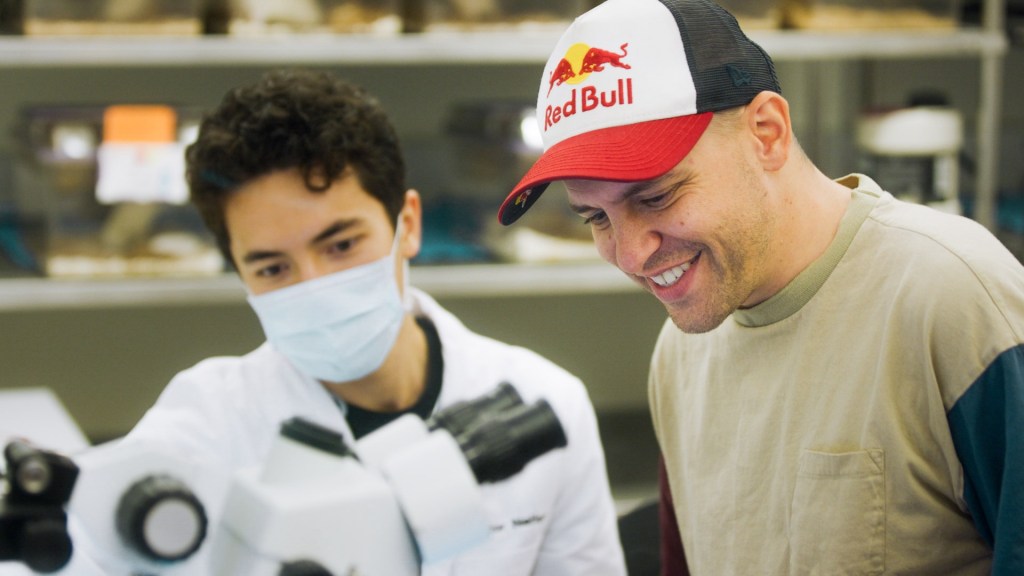
The research focuses on the electrical stimulation of the vagus nerve, dubbed the body’s “super nerve,” aiming to enhance conventional rehabilitation outcomes.
When he was shown videos of patients’ improvement over time, the gamer was floored, having previously assumed that such results were still far in the future of scientific research.
“It blew my mind that we’re so close. Today I saw people who after 30 sessions had drastically different movements in their hands.
“That’s just a month, essentially, of work with this implant. Think about how far it could go. It’s so exciting,” he remarked.
GrandPOOBear, who himself spent months recovering from a spinal cord injury incurred in a snowboarding accident and is a pro gamer, was delighted to discover that some of the vagus stimulation tasks involved playing carefully developed video games with controllers designed to improve hand function.
Dr Michael Kilgard, Executive Director and Chief Science Officer at UT Dallas Biomedical Device Center, explained: “Spinal cord injuries cause severe disabilities. With vagus stimulation, we strive to create new neural connections and restore the independence of those affected.”
The clinical trial involves implanting a small chip in the neck, which sends electronic impulses to the brain via the vagus nerve.
Over time, the brain learns to modify its circuits, leading to nerve cells releasing neurotransmitters and reconnecting.
Remarkably, initial improvements can be observed in as little as one week, with continued progress after that.

The significance of the vagus stimulation project extends beyond motor function improvement.
Having seen in prior experiments that vagus stimulation can triple the number of arm-control neurons in the brain, Kilgard and his team aim not only to improve arm and leg function but also fine motor skills.
Many patients report that restoring the simple ability to open a bottle of water or feel a family member holding their hand would significantly better their lives.
The project is already showing promising results in improving the lives of subjects in a clinical trial, and there is optimism that, with adequate research funding and trialling, the treatment of spinal cord injury could be broadly available within just five years.
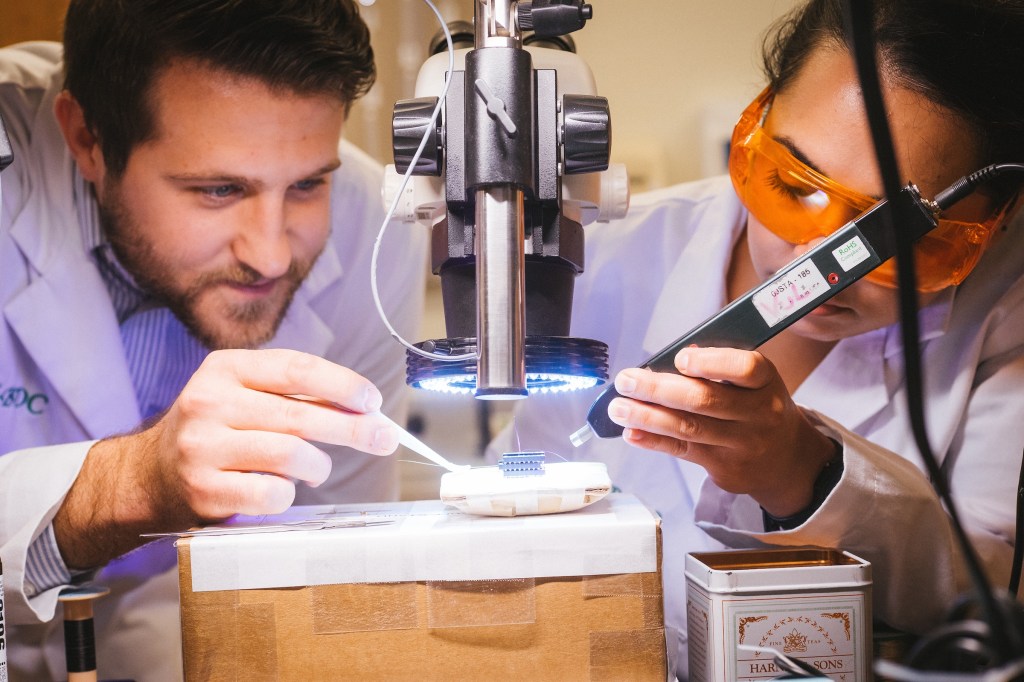
Moreover, the UT Dallas team has adapted the technology to be small and inexpensive enough for patients to use it at home, further enhancing its accessibility and potential impact.
Fresh from his trip to see the research in person GrandPOOBear urges people to participate in the upcoming Wings for Life World Run, the primary fundraiser for spinal cord research.
He emphasised: “I’ll be involved in the Wings for Life World Run again this year, and I really encourage everybody out there to join in, too.
“It’s such a great feeling because whether you run, roll a wheelchair, jog or walk, every bit of your entry fee goes to places like this amazing research centre in Texas.
“In other words, when more people participate, more research can be funded. And by taking part yourself, you’re making a serious impact on spinal cord injury, today.”
Each year, around 250,000 new cases of spinal cord injuries emerge worldwide, highlighting the pressing demand for innovative treatments.
The Wings for Life Foundation has long been at the forefront of supporting groundbreaking research initiatives and clinical trials on a global scale.
This ongoing commitment reflects the foundation’s dedication to seeking a cure.
The recent strides made in the vagus stimulation project exemplify the potential for its widespread adoption in spinal cord injury treatment.
The Wings for Life World Run is a global phenomenon, taking place simultaneously in multiple locations across the globe.
From amateur enthusiasts to seasoned professional athletes, participants of all levels are welcome to join the event.
Unlike traditional races, where crossing the finish line first is the ultimate goal, this run is about the collective experience of running for a cause.
After the start, 30 minutes later, a virtual or real Catcher Car begins its pursuit, gradually overtaking participants one by one.
The emphasis is not on speed or distance covered but on the camaraderie and spirit of participation.
Furthermore, every entry fee and donation directly contributes to spinal cord research, making each step a meaningful contribution towards a crucial cause.
In the editions of the Wings for Life World Run that have been completed to date, a total of 1,293,716 registered participants from 195 nationalities ran, walked, and rolled on all seven continents, raising a total of €43.8 million to find a cure for spinal cord injury.
The 11th edition of the Wings for Life World Run is scheduled for Sunday, May 5, 2024.
To register or learn more, click HERE.
 THE HERDWICK NEWS