The Duddon and Furness Mountain Rescue Team are appealing for support in raising funds for a permanent base as they come to the end of their busiest year on record, emphasizing the inadequacies of their current rental accommodation.
The Team has seen 64 full-team callouts to date this year against an average a few years ago of 25.
In addition, there have been another 17 calls for assistance where the team has been placed on stand-by, sometimes for several hours, or limited action has been required.
The average number of full-team call-outs has risen in more recent years to about 40 per year. The weekend of 3-4 December saw 10 call-outs in response to the snow event.
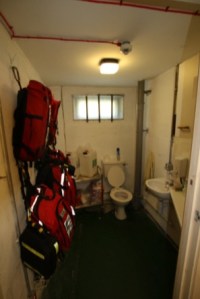
Tom Fairchild, one of three deputy team leaders, highlighted an occasion during the snow when a family took shelter at the base, having abandoned their car saying: “The children had to be placed in the above illustrated warm room, along with the medical packs as the gases need to be maintained at about 10°C.
“The control room was also slightly flooded when snow under the vehicles melted. In the planned base non-garage facilities will be on the first floor.”
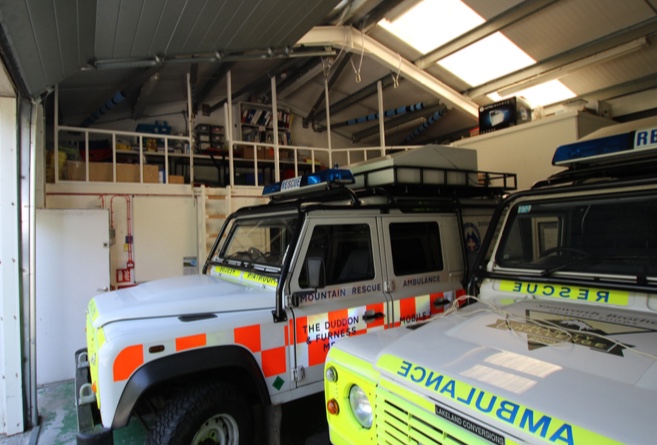
The only team in the Lake District not to have a permanent home, DFMRT currently operate out of unheated rented space but have over the last few years been raising funds for a permanent and modern base.
Martin Cooper the team fundraising officer continued: “The planned base will be a game- changer in terms of our ability to support the local community by enhancing our operational capability, including the ability to host multi-agency incidents, and to host youth training events.
“Our very presence as a free search and rescue service enables outdoor organisations and the general public to venture onto the hills with the assurance that should things go wrong help is at hand.”
While planning permission has been granted, land secured and £775,000 funds raised, rising costs since before COVID19 have left a funding shortfall of £150,000 for the main build.
Several funders have been approached but the need for a wider campaign remains.
Increasing call-out numbers leave the team needing a permanent base suitable for storing and drying kit, training under appropriate conditions and with facilities for team members and occasionally relatives of casualties to wait for deployment or recovery.
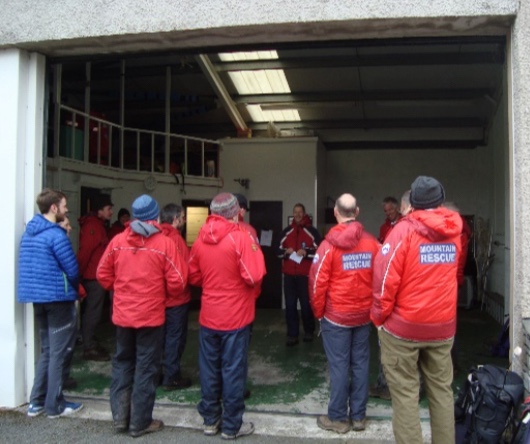
The Team covers the area of SW Cumbria from Ravenglass in an arc around to Cartmel.
Two thirds in the new Westmorland & Furness area and a third, to the west of the river Duddon, in Cumberland.
50 percent of normal full-team call-outs are working jointly with their neighbour, Wasdale MRT, the busiest team in the Lake District this year, or occasionally with other teams.
Any member of the public who wishes to support the team should visit our website https://www.dfmrt.org.uk/index.php/support-us
 THE HERDWICK NEWS