The Freshwater Biological Association has secured funding from the Lake District Foundation and National Trust to continue the important Big Windermere Survey.
The survey, a citizen science project conducted in collaboration with Lancaster University, aims to enhance our understanding of water quality in Windermere.
Undertaking such a massive project necessitates the support of a dedicated team of volunteers, as well as funding to cover sampling kits, laboratory analysis, and staff time. Consequently, The Freshwater Biological Association is delighted to have secured Lake District Foundation and National Trust funding.

This funding will enable them to carry on with this innovative project alongside Lancaster University for another season.
“The Lake District Foundation is very pleased to be able to support the Big Windermere Survey, and we are grateful to our many donors for making this possible,” Sarah Swindley, CEO at Lake District Foundation, said.
“The Big Windermere Survey is a key part of the Love Windermere partnership, which is working together to look after this iconic lake for generations to come. Having robust data to best direct activity is vital, and the survey is clearly providing this.”
Laura Ruxton, General Manager of the South Lakes Portfolio at the National Trust, added: “The National Trust recognizes the importance of understanding Windermere’s water quality through regular sampling and testing. Through the Love Windermere partnership, we are pleased to support the Big Windermere Survey to include the community around the lake in this work.”
The upcoming Big Windermere Survey is scheduled for Sunday, August 13. Volunteers will be trained to collect water samples from Windermere and its tributaries, which will be analyzed for nutrient and bacterial concentrations at independent laboratories.
This process will yield the most significant one-day snapshot of conditions in Windermere.
To date, the Big Windermere Survey has already conducted four surveys, covering the summer and autumn of 2022, as well as the winter and spring of 2023. This comprehensive data collection spans all four seasons of the year.
Dr Lynsey Harper, Senior Scientist at the Freshwater Biological Association, emphasized the importance of gathering data throughout each season. “Identifying patterns in the concentrations of nutrients, such as phosphorus and nitrogen, and bacteria that can indicate the presence of faecal matter is crucial,” she explained. “This allows us to determine which locations experience good or poor water quality year-round and which locations face poor water quality during specific seasons.”
Dr Ben Surridge, Senior Lecturer at Lancaster University, highlighted the impact of nutrient concentrations on algal blooms.
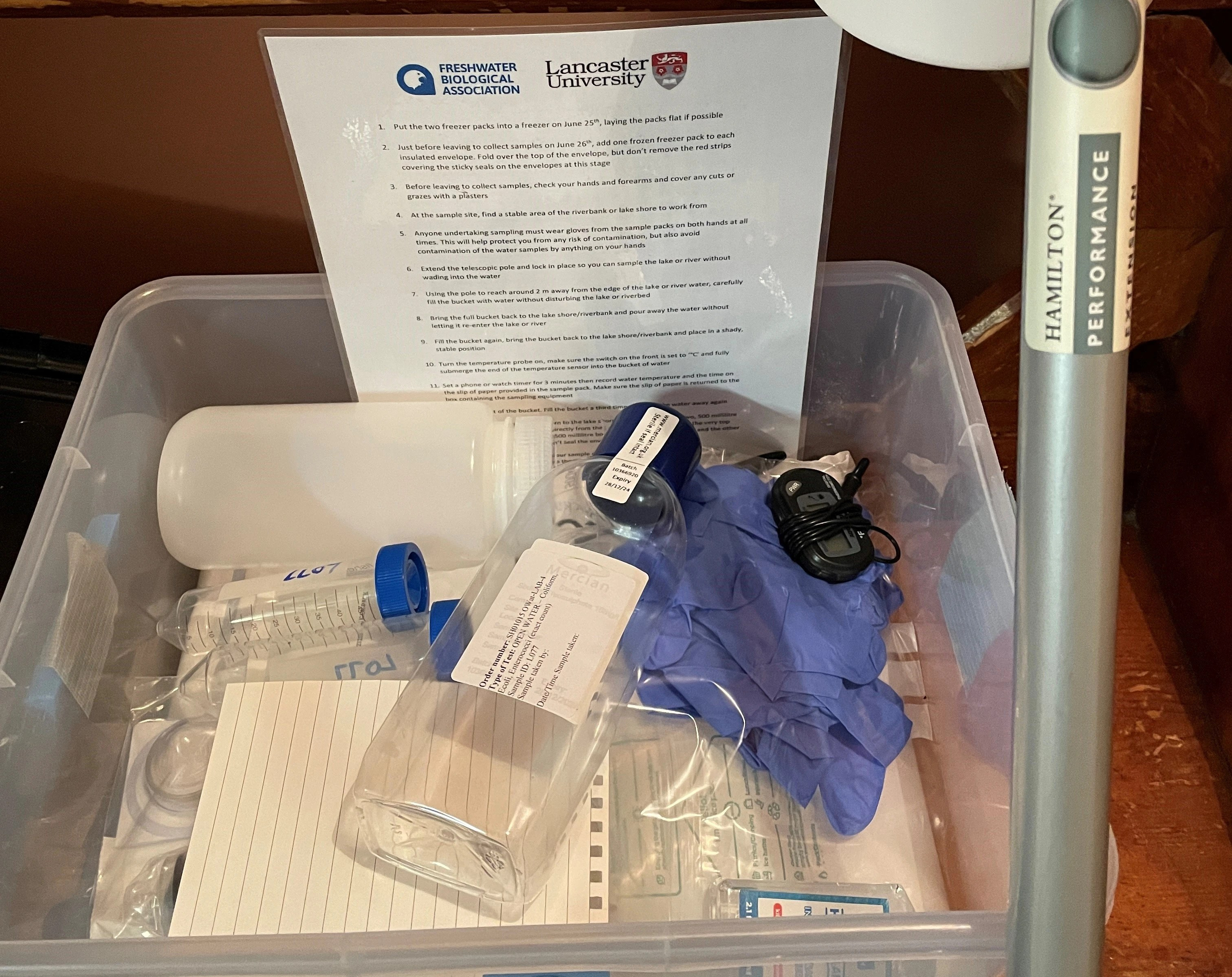
“High nutrient concentrations, combined with warm, dry, and stable weather conditions, can increase the frequency and intensity of algal blooms,” he stated. “These blooms can be harmful if they produce toxins or lower dissolved oxygen levels in the lake water. The Big Windermere Survey informs targeted action on the ground, as the data from the survey are used to inform decision-making processes and to bring about action to maintain and improve water quality.”
For those interested in reviewing the results from the previous rounds of the Big Windermere Survey, the Freshwater Biological Association website offers public access to the data.
If you wish to contribute to the Big Windermere Survey and become a scientist for the day, mark your calendars for Sunday, August 13, and reach out to windermere@fba.org.uk.
Emma Kelly, Windermere Project Officer, encourages everyone to get involved, statin:, “Getting involved in the Big Windermere Survey as a volunteer is a great way to get out and about on a Sunday morning, helping to collect valuable data to assess the water quality of
 THE HERDWICK NEWS